
MCSO Day Reporting Release
The Montgomery County Sheriff’s Office describes Day Reporting as an alternative to incarceration for certain screened people. The supported group is narrow: nonviolent people serving a sentence may be considered for release into daily reporting. The program can include community service and supervision by deputies. Those conditions are central, not side notes.
A jail record may truthfully show that the person left Montgomery County Jail, while the court and MCSO still impose daily duties. Both facts should be reported. “Released into the Day Reporting Program” is more accurate than “fully discharged” unless a later order or program record ends the obligation. The entry is also different from transfer to ODRC, parole under the Ohio Adult Parole Authority, or an ordinary bond release.
| Status | What it establishes | What it does not establish |
|---|---|---|
| Jail book-out | The Montgomery County Jail booking ended | That all court duties ended |
| Day Reporting admission | The person entered a structured MCSO alternative | Unsupervised community release |
| Program compliance | The person met a reported duty or phase | Final discharge from the sentence |
| Program completion | The program reports completion | That no court order or other case remains |
Confirm MCSO Program Release
Use a custody-chain check. JusticeWeb is the official current-custody interface for Montgomery County Jail. It updates frequently but has no released tab or Day Reporting history. An absent name is only a clue that the live roster no longer reports the person in that jail. The MCSO release record and court docket must identify the next step.
- Search JusticeWeb and preserve its displayed update time. A current match means the jail reports custody at that snapshot, not Day Reporting release.
- Call inmate information at 937-225-4160 and ask whether the booking ended and whether the disposition was Day Reporting, community release, or transfer.
- Request the MCSO booking and release record with the book-out date and time, exact disposition, and receiving program or agency.
- Search the correct sentencing court. Read the sentence, jail-time credit, program authorization, and all later violation or completion entries in order.
- Contact the MCSO Programs line at 937-225-4105 for the proper public route to confirm program admission or completion.
- Report final discharge only when the program and court record support it. A roster miss cannot supply that conclusion.
The official MCSO programs page is the source for the Day Reporting description.
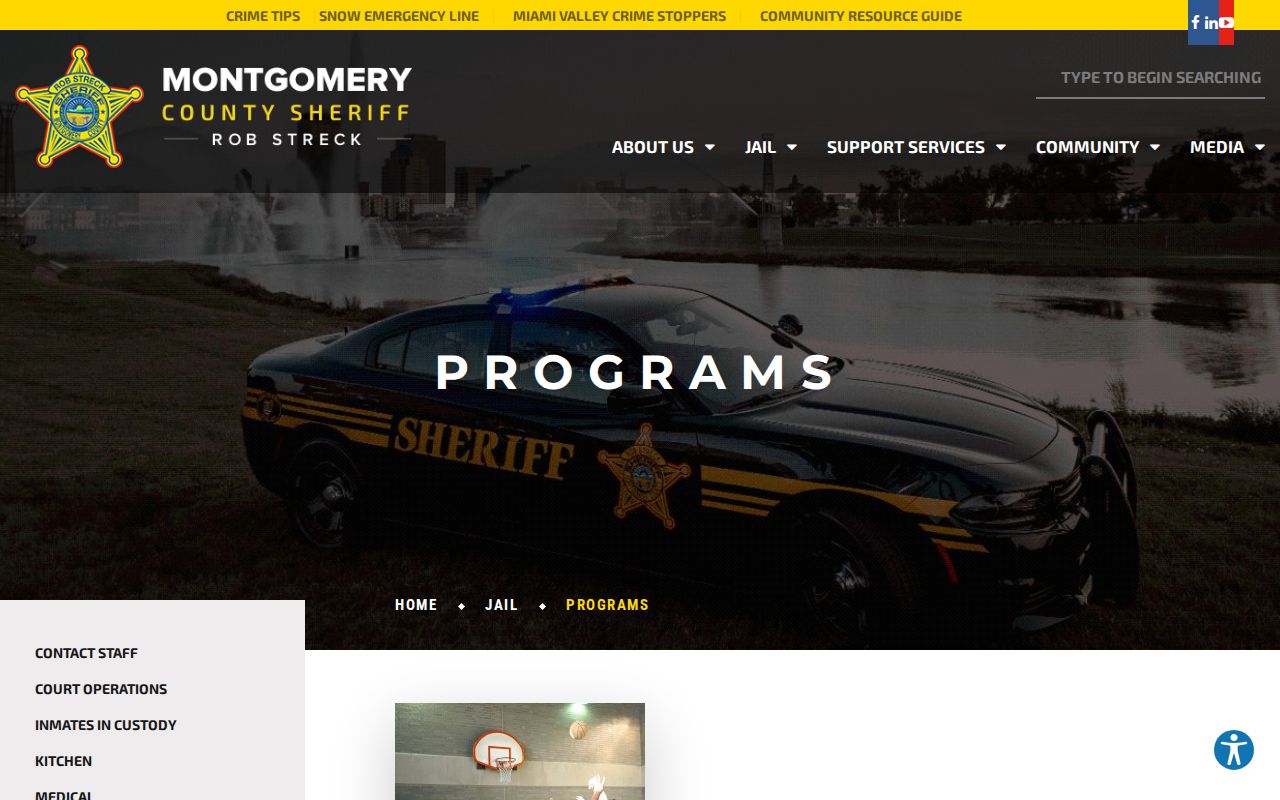
The program source confirms the structured alternative, while a person-specific release still requires the jail and court records.
Important: Release into daily reporting ends a jail-bed placement, but it does not erase the sentence, supervision, or program conditions.
MCSO Program Eligibility Limits
Day Reporting is not an open enrollment choice and not a broad release category. MCSO says screened nonviolent sentenced people may be placed in the program in lieu of incarceration. The word “screened” means eligibility is decided through the official process. No public source in the research supplies a formula that lets a reader predict acceptance from the charge or sentence alone.
Pretrial release should not be confused with this sentenced-person program. A pretrial person may leave on bond or under Pretrial Services conditions, but that is a different legal route. Likewise, MonDay Community Correctional Institution is a secure community-based correctional facility tied to probationable felony cases. Similar words such as reporting, community, or supervision do not make the programs interchangeable.
The controlling court order should be read as written. If it names Day Reporting, preserve that label. If it names community control, pretrial supervision, MonDay, jail, or ODRC, use the actual disposition. Asking MCSO to define an unfamiliar local code is safer than importing a meaning from another Ohio county.
- Jail alternative
- A structured sanction used instead of occupying a jail bed.
- Community service
- Work required under the program or court terms, as officially assigned.
- Supervision
- Ongoing oversight and duties after physical release from the jail.
- Discharge
- The formal end of the relevant program or sentence duty.
MCSO Program Records Contact
MCSO Programs provides the subject-matter route, but the stable historical proof starts with Records and the court. The MCSO Records Department is at 345 W. Second Street, Dayton, Ohio 45422. Its public counter is open Monday through Friday from 8 a.m. to 3 p.m. Ohio’s public-record standard is prompt inspection and copies within a reasonable period, not a guaranteed number of days.
A narrow request reduces ambiguity: ask for the booking and release record for the named person and approximate booking period, including booking number, book-out date and time, exact disposition, and the program or receiving agency. Add the date of birth, booking number, or case number when known. Request electronic delivery and an advance cost estimate. If material is withheld, ask for the cited legal basis and the remaining redacted record.
MCSO Programs
937-225-4105
Use for the official route concerning Day Reporting admission, requirements, or completion.
MCSO Records Department
345 W. Second Street
Dayton, OH 45422
Monday through Friday, 8 a.m. to 3 p.m.
Jail Information
937-225-4160
Ask whether the jail currently holds the person and how the booking ended.
Note: The separate police-video processing fee is not the ordinary price for a booking or Day Reporting release record.
Montgomery Court Reporting Order
The court docket explains why MCSO could release the person into the program. Start with Montgomery Public Records Online for Common Pleas General and County Municipal coverage. Dayton and several municipal courts use their own portals, so the charging court and case number control. Read the sentence, credit, reporting term, and later entries rather than stopping at the initial bond or charge.
A later violation may change the result. The court could modify community control, issue a warrant, or order custody after due process. A warrant can exist before JusticeWeb shows a new booking. Conversely, a court order alone may not show the exact moment the jail completed physical release. The docket and MCSO event complement each other.
Online PRO document images normally appear within 48 to 72 hours after filing. That delay is a court-image issue, not a three-day release rule. Some material may also be confidential or unavailable online, while certified entries require the Clerk. When a fresh release and a delayed image conflict, preserve the event times and revisit the docket.
Record sequence: Sentence or authorization, MCSO book-out, Day Reporting admission, compliance or violation, completion, then final court discharge.
Montgomery Jail and Program Roles
The jail landing page groups MCSO custody and program information, but each record has a separate role. JusticeWeb answers whether the named person is currently in Montgomery County Jail. The requested booking/release record documents the physical departure. The Day Reporting program record covers the structured alternative. The court docket supplies the sentence and legal changes.
The official MCSO jail and programs landing page is captured here.
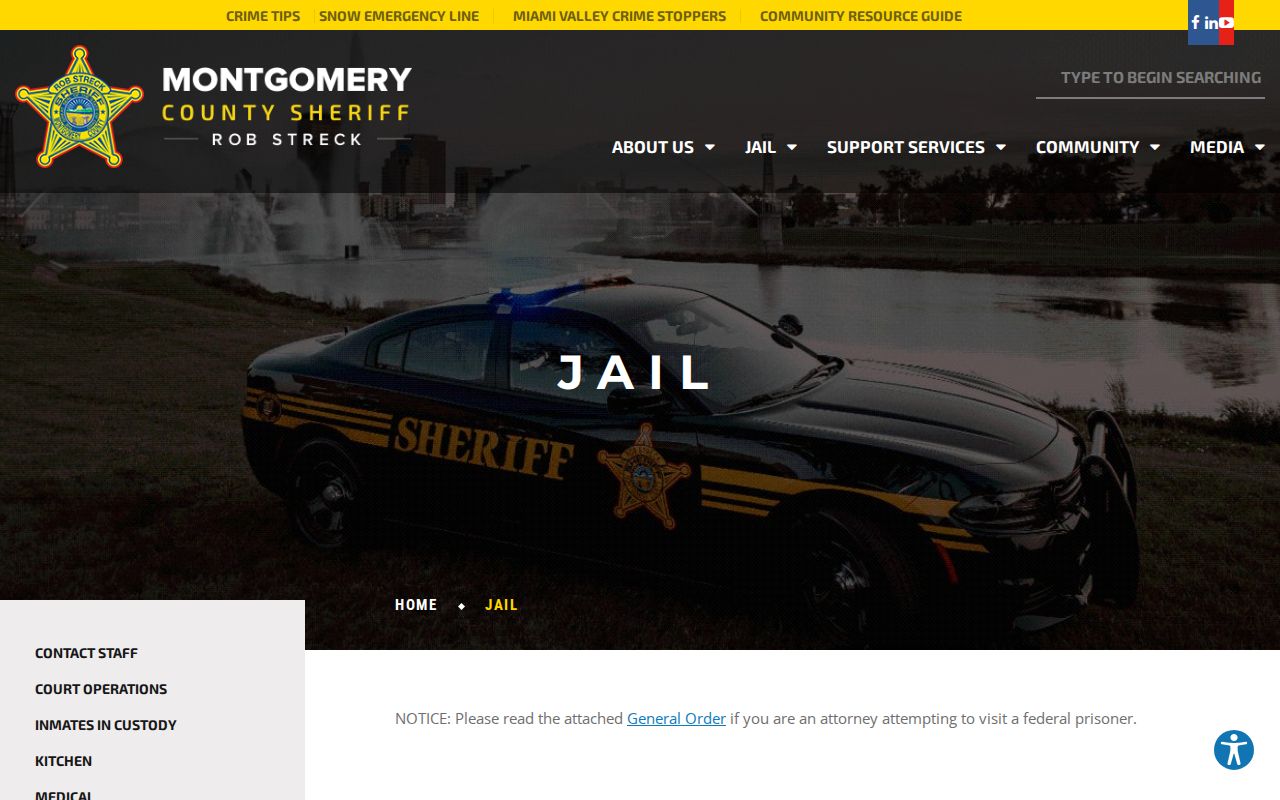
The source connects the program to the Sheriff’s jail operations without turning Day Reporting into a second jail.
| JusticeWeb | Current county-jail custody only; no Day Reporting completion archive. |
|---|---|
| MCSO release record | Book-out time, disposition, and program or receiving agency when documented. |
| Day Reporting record | Program admission, required reporting, and person-specific completion route. |
| Court docket | Sentence, authorization, community-control terms, violations, and final action. |
MCSO Program Completion Records
Completion should be confirmed through the program and the latest court entry. It may satisfy a named condition or mark the end of the structured reporting phase. It does not by itself prove that every case, fine, sanction, or supervision duty has ended. Use the exact status stated by MCSO and the court.
If the person does not complete the program, do not assume immediate rebooking. A reported violation can precede a hearing, warrant, changed order, or jail return. JusticeWeb can show only a current county-jail snapshot. The docket supplies the process and result. A later ODRC record matters only if a court commitment leads to state custody.
The distinction also protects the release date. The county book-out date may be the day the person entered Day Reporting, while final program discharge occurred later. Record both dates and label each event. Do not replace the earlier custody date with the later supervision date or merge them into one unsupported “release.”
For a person-specific chain that crosses the jail, court, and another custodian, use the Montgomery County release-record process. That route preserves the source, time, and exact disposition at every step.
After MCSO Program Release
Montgomery County provides an Office of Reentry for people returning from local or state incarceration. The walk-in office is at 1133 S. Edwin C. Moses Boulevard, Suite 370, Dayton, with weekday hours from 8:30 a.m. to 5 p.m. and telephone 937-496-7129. A separate training center operates by appointment Tuesday through Thursday at 1111 S. Edwin C. Moses Boulevard, Suite 1175, through 937-496-6604.
Reentry navigation does not verify Day Reporting status. It is a practical local resource after custody. The program participant must still comply with MCSO and court directions, and only those agencies can confirm completion or discharge. The county Reentry Collaborative covers returns from both local and state incarceration, which makes the service broader than one supervision program.
No dedicated Day Reporting release hour, public exit point, or facility-specific counter schedule was established in the research. Those details should be confirmed with MCSO instead of guessed. Published jail property or bond procedures also should not be copied onto this program unless the Sheriff says they apply to the named person.