
Dayton Correctional Institution Release Paths
Dayton Correctional Institution is operated by the Ohio Department of Rehabilitation and Correction. It is a state prison for women in Dayton, not a county detention center. A person may leave the institution through a community discharge, judicial release, parole, post-release control, or transfer within the state system. Those terms are not interchangeable. Judicial release is a court-authorized mechanism, parole is conditional release under the Adult Parole Authority, and post-release control is a period of supervision that may follow a prison term.
The public ODRC record is the first source for current state status. It can show Incarcerated, Released, APA Supervision, or Violator at Large classifications and person-specific detail. The sentencing docket supplies the legal order or case history. Central Records can answer a narrow request for permitted discharge-status information. A transfer into Dayton Correctional Institution is not a release from incarceration because state custody continues.
| State event | Where it appears | How to read it |
|---|---|---|
| Institutional transfer | ODRC institution and status fields | Custody continues at another state facility. |
| Judicial release | ODRC release status and sentencing docket | Prison release under a court mechanism; supervision may follow. |
| Parole | ODRC release and Parole Board details | Conditional community release under APA oversight. |
| Post-release control | APA supervision fields | Prison custody ended while state supervision continues. |
| Discharge | ODRC status and permitted record confirmation | Read the exact record because release and end of supervision can occur on different dates. |
Search Dayton Correctional Institution Releases
The ODRC Offender Search covers current Ohio prisoners, people under department supervision, and judicially released people. It is not a complete archive of every person ever discharged. Search an identified person by exact first and last name, then use the ODRC number to resolve duplicate names. County of commitment is the sentencing county, not the current facility or home address.
- Enter the exact name and ODRC number when available. Use All status if the present classification is unknown.
- Try Released for an ODRC-reported release and APA Supervision for parole, post-release control, or related state oversight.
- Open the correct detail. Match identity, ODRC number, institution, committing county, docket, and photograph.
- Read current status and release details before using any expected or eligibility date.
- Check the APA panel and sentencing docket for supervision and the legal release mechanism.
The official search form shows the state fields used for this facility.
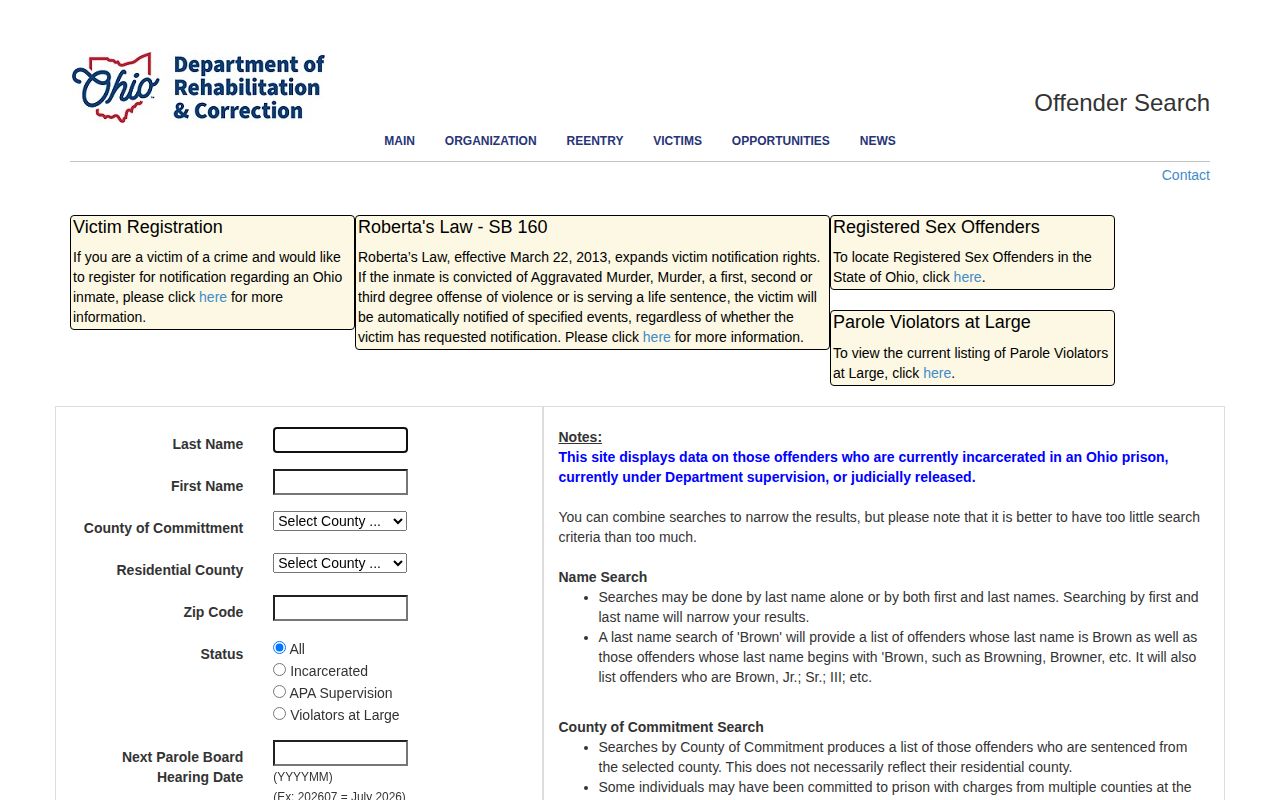
Use the ODRC result because ODRC controls the state prison custody and release record.
Dayton Correctional Institution Release Fields
An ODRC detail can combine identity, sentence, custody, date, and supervision information. Read each group separately. The official released example displays an ODRC number, name, demographic data, admission date, institution, photograph, status, offense and statute, sentence effective date, jail-time credit, term, committing county, docket, judge, net sentence, and the field labeled Expected Release Date/Parole Eligibility Date. Not every record will display every item.
- Current status
- The department’s present classification, such as Incarcerated, Released, APA Supervision, or VAL.
- Institution
- The reported state facility in the custody record; it is not a release destination by itself.
- Committing county
- The sentencing county. It does not show where the person currently lives or reports.
- Expected release or eligibility date
- A projected release date or date pending parole consideration, not proof of actual departure.
- APA details
- State supervision start, period, office, and review information when displayed.
The official judicial-release example demonstrates how a released label and sentence fields appear together.
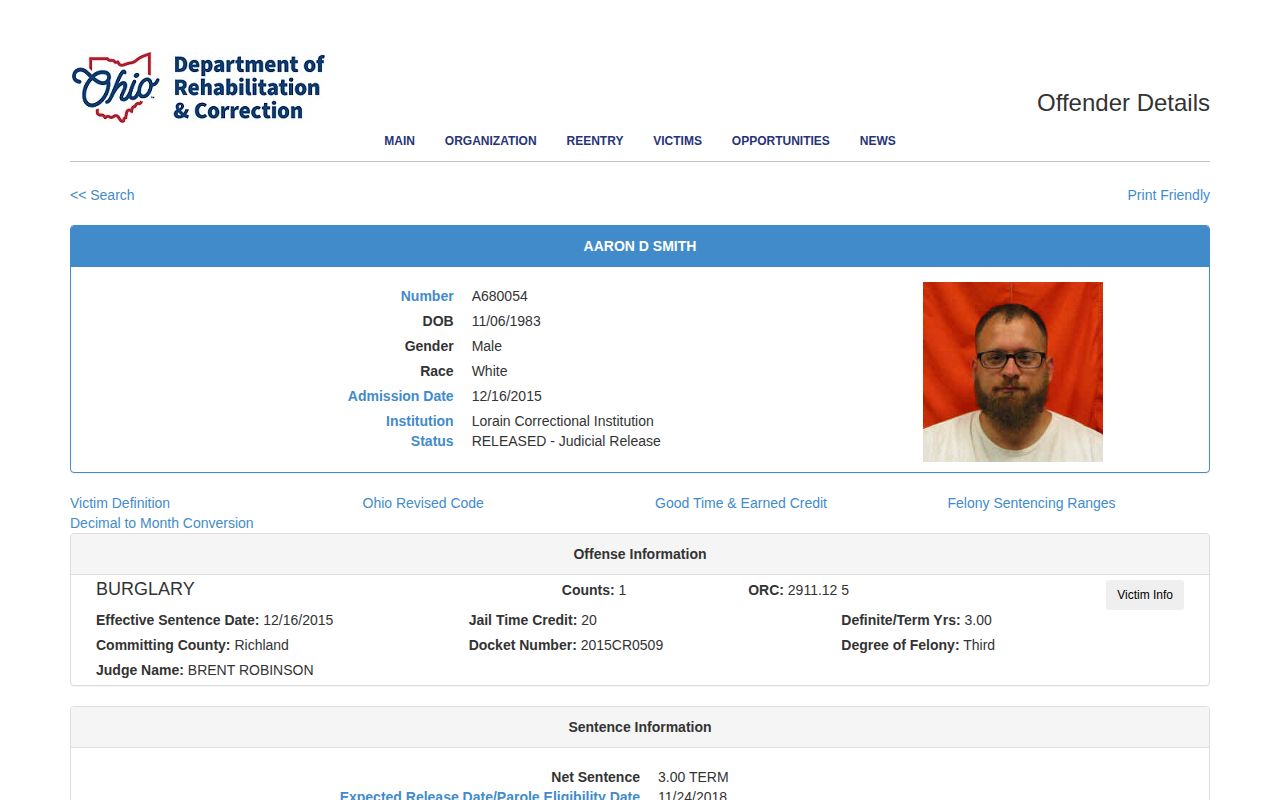
That example proves how ODRC can report a judicial release. It is not evidence about every woman held at Dayton Correctional Institution.
Dayton Expected Versus Actual Release
ODRC defines Expected Release Date/Parole Eligibility Date as a projected release date or a date pending parole consideration. It can change. Jail-time credit, mandatory portions, consecutive cases, earned-credit eligibility, program completion, conduct decisions, appeals, judicial action, detainers, parole review, and recalculation can affect the timeline. Parole eligibility opens consideration; it does not guarantee release.
Do not calculate a Dayton Correctional Institution release from the sentence length alone. Instead, record the exact expected field with the date of the search, then compare current status and any release or parole detail. If the status remains Incarcerated, the expected date has not established a completed departure. If the status reports Released, read the attached mechanism and the sentencing docket. The Release Date Lookup process explains Ohio’s person-specific projected-date rules in greater depth.
Dayton Release and APA Supervision
Leaving Dayton Correctional Institution may begin a period under the Ohio Adult Parole Authority. Search APA Supervision separately when the ordinary word “released” could include parole or post-release control. The detail may show a supervision start, supervision period, APA office, residential county or ZIP, and review information. Treat a residential field as the last recorded value. It may lag and does not prove where the person is at the moment of the search.
The official Montgomery APA example shows how release and supervision can overlap.
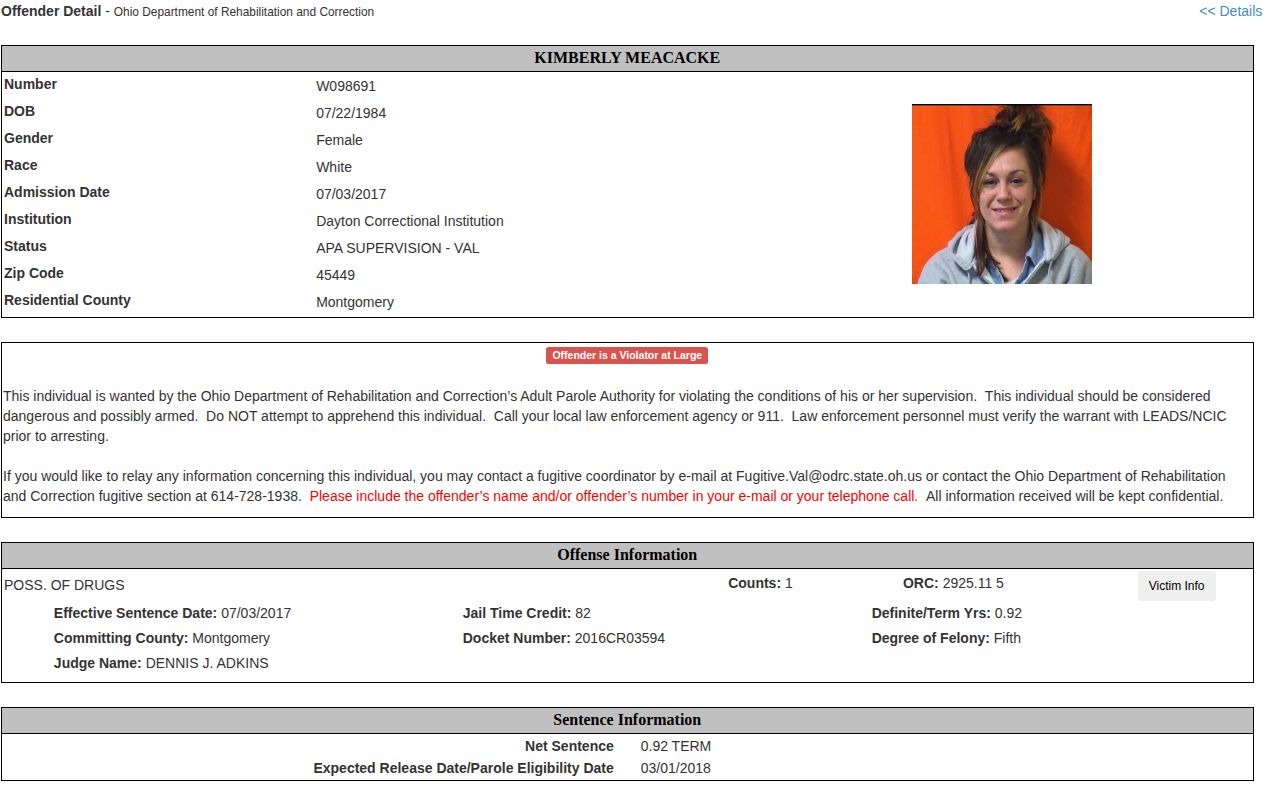
The record includes Montgomery committing-county context, supervision, an APA office, and review information. Committing county identifies the sentence source, not current residence.
A status of APA Supervision-VAL means ODRC reports a violation or absconder classification. Absconder means the agency reports that the person is not complying with required contact or location terms. ODRC says law enforcement must verify an arrest basis through LEADS or NCIC and warns the public not to apprehend anyone. For ordinary supervision verification, use the Post-Release Supervision page and the official agency record.
Dayton Discharge Records Contact
ODRC Central Records is the appropriate written route when the public result needs a permitted discharge or release-status confirmation. Name the person and ODRC number. Ask for the specific status or discharge fact needed and, when relevant, a validated Parole Board decision or minutes. Do not request or promise the full institutional file.
Ohio Department of Rehabilitation and Correction
Attn: Central Records
P.O. Box 430
Columbus, OH 43216
Ohio Revised Code 5120.21 requires ODRC to maintain institutional records that include transfer and discharge information, but it also restricts public access to most inmate and APA material. The law permits specified information such as name, conviction, photograph, supervision status, current or past place of incarceration, and discipline data. A public search result does not make the entire file public.
No Dayton Correctional Institution street address, direct records number, or release-desk hours were established in the supplied facility research, so none is substituted here. Central Records and the ODRC public search are the verified channels. If certification of the legal order matters, request a certified entry from the sentencing clerk.
Dayton Release Court Record
The sentencing docket explains the legal authority behind a Dayton Correctional Institution release. Match the ODRC committing county and docket number to the court record. A judicial-release motion is only a request. An order can authorize the mechanism, but physical release should still be confirmed through the updated ODRC status. A parole decision likewise may be followed by review or later information before departure.
Read entries in sequence, especially sentence terms, jail-time credit, consecutive or concurrent cases, judicial-release rulings, appeals, violations, and termination entries. Court sealing, confidentiality, and portal limits can affect online access. A missing search result does not prove the person was never incarcerated or released. Certified copies come from the correct clerk, while ODRC controls its own custody and release status.
This two-source check prevents a common error. A transfer into Dayton Correctional Institution starts or continues state incarceration. Only a later ODRC release event and the related legal record support a claim that the person left the prison system.
Dayton Correctional Institution Release Details
Dayton Correctional Institution is an ODRC state prison for women in Dayton. It is not a release program. The ODRC offender search, ODRC release and APA fields, Central Records, and the sentencing court form the correct custody and discharge chain.
| Question | Correct source |
|---|---|
| Is the person currently in an Ohio prison? | ODRC current status and institution fields. |
| Did state prison release occur? | ODRC Released status and release detail. |
| Does state supervision continue? | ODRC APA Supervision fields and Adult Parole Authority record. |
| Why was judicial release ordered? | The sentencing court docket matched by case number. |
| Can a permitted status fact be confirmed in writing? | ODRC Central Records with name and ODRC number. |
A careful result quotes the current status exactly, records the date of the search, labels projected dates as projected, and notes any supervision. The method verifies a state corrections event without borrowing county-jail assumptions or presenting a transfer into prison as freedom.